

Top Resistance Band Exercises to Alleviate Shoulder Pain Effectively
- Mar 13
- 3 min read
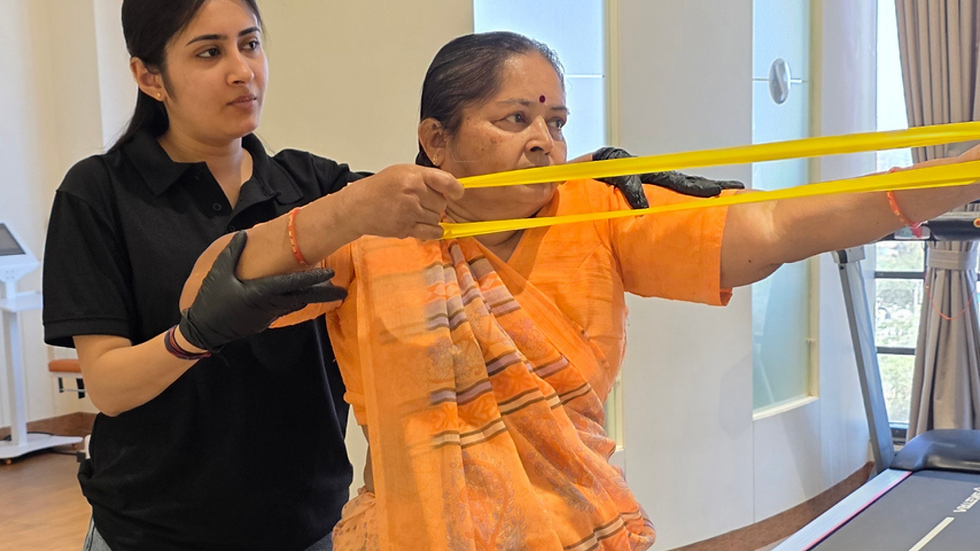
Shoulder pain can limit daily activities and reduce quality of life. Many people experience discomfort due to muscle imbalances, poor posture, or injury. Resistance band exercises offer a simple, low-impact way to strengthen shoulder muscles and improve mobility. This guide explains how to use resistance bands safely and effectively to relieve shoulder pain, based on physiotherapy principles.
Why Use Resistance Bands for Shoulder Pain?
Resistance bands provide controlled resistance that helps rebuild strength without stressing joints. They are portable, affordable, and adaptable for all fitness levels. Unlike heavy weights, bands allow smooth, gradual muscle activation, which is ideal for rehabilitation.
Using resistance bands can:
Improve shoulder stability by targeting rotator cuff muscles
Increase range of motion and flexibility
Reduce inflammation by promoting blood flow
Support proper posture and muscle balance
Physiotherapists often recommend resistance band exercises as part of a comprehensive shoulder pain management plan.
Key Muscles to Target
Effective shoulder pain relief focuses on strengthening these muscles:
Rotator cuff muscles: Supraspinatus, infraspinatus, teres minor, subscapularis
Deltoids: Anterior, lateral, and posterior fibers
Scapular stabilizers: Rhomboids, trapezius, serratus anterior
Strengthening these muscles helps stabilize the shoulder joint and prevents further injury.
Top Resistance Band Exercises for Shoulder Pain Relief
1. Shoulder External Rotation
This exercise targets the infraspinatus and teres minor, important for shoulder stability.
Attach the band to a fixed point at waist height.
Stand sideways with the affected arm closest to the anchor.
Hold the band with the elbow bent at 90 degrees, tucked against your side.
Rotate your forearm outward, away from your body, keeping the elbow in place.
Slowly return to the starting position.
Perform 2 sets of 10-15 repetitions.
2. Shoulder Internal Rotation
This movement strengthens the subscapularis muscle.
Attach the band at waist height.
Stand with the unaffected side facing the anchor.
Hold the band with the elbow bent at 90 degrees, close to your side.
Pull the band inward across your body.
Return slowly to the start.
Complete 2 sets of 10-15 reps.
3. Scapular Retraction
This exercise activates the rhomboids and middle trapezius to improve posture.
Hold the band with both hands, arms extended in front.
Pull the band apart by squeezing your shoulder blades together.
Keep your arms straight and chest lifted.
Slowly release the tension.
Do 2 sets of 12-15 repetitions.

4. Shoulder Abduction
This targets the deltoid muscles, especially the lateral fibers.
Stand on the middle of the band with feet shoulder-width apart.
Hold the ends of the band in each hand at your sides.
Raise your arms out to the side up to shoulder height.
Lower slowly back down.
Perform 2 sets of 10-12 reps.
5. Shoulder Flexion
This exercise strengthens the anterior deltoid and improves forward arm movement.
Stand on the band with feet shoulder-width apart.
Hold the band ends with palms facing down.
Lift your arms straight in front of you to shoulder height.
Lower with control.
Complete 2 sets of 10-12 repetitions.
Tips for Safe and Effective Practice
Warm up with gentle arm circles or light cardio before exercising.
Start with light resistance bands and increase tension gradually.
Maintain good posture: keep your shoulders down and back.
Move slowly and avoid jerky motions.
Stop if you feel sharp pain or discomfort.
Consult a physiotherapist if pain persists or worsens.

When to Seek Professional Help
If shoulder pain lasts more than a few weeks, worsens, or limits daily activities, professional assessment is necessary. A physiotherapist can tailor exercises to your condition, monitor progress, and adjust treatment. They may also use manual therapy, ultrasound, or other modalities alongside resistance band exercises.
Summary
Resistance band exercises offer a practical way to relieve shoulder pain by strengthening key muscles and improving joint stability. Incorporate external and internal rotations, scapular retractions, and deltoid-focused movements into your routine. Use proper technique and start with light resistance to avoid injury. Consistency is key to seeing improvement.



Comments